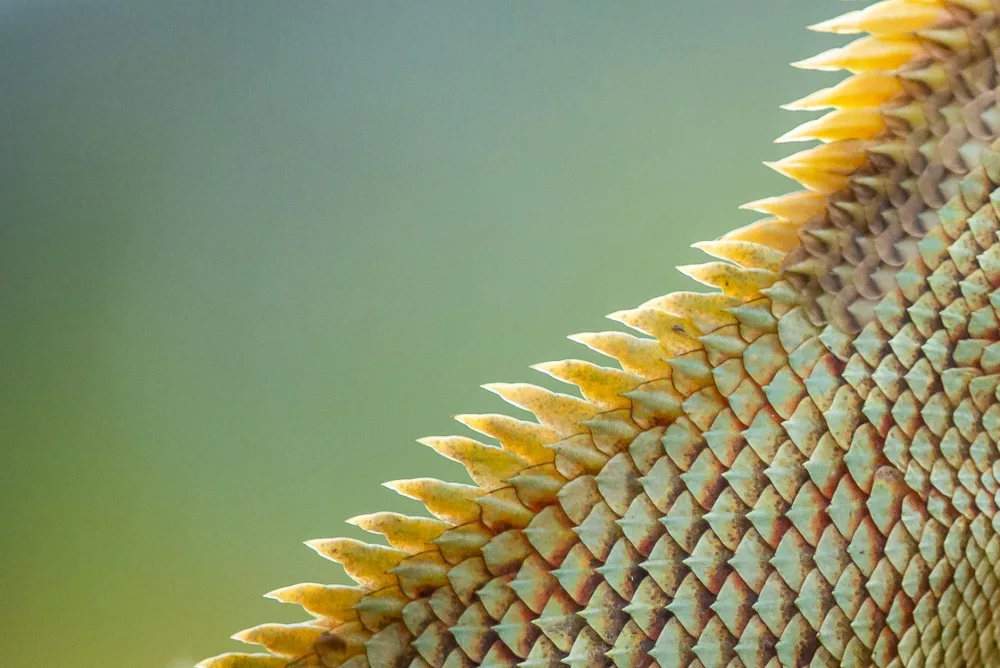
I've always found myself captivated by the sheer diversity of life on Earth, and few things illustrate nature's ingenious solutions quite like the skin of a lizard. It isn't just a covering; it's a dynamic, multifaceted organ that plays an absolutely critical role in the survival of these reptiles. When I think about it, the evolution of lizard skin is a compelling story of adaptation, allowing these creatures to thrive in an astonishing array of environments, from parched deserts to humid rainforests, and even within aquatic settings. It’s far more intricate than we often give it credit for, believe me.
The Structural Foundation: Scales and Keratin
The most immediately noticeable feature of lizard skin, of course, is its scaly appearance. These aren't just decorative elements; they represent a brilliant evolutionary strategy. What I’ve learned is that these scales are essentially folds of the epidermis, the outermost layer of skin, and they're composed primarily of keratin. This is the very same protein that makes up our own hair and fingernails, but in lizards, it's organized in a way that provides exceptional protection. It's a fantastic example of convergent evolution, in a way, creating tough, resilient surfaces across various species.
You see a lot of variation in scale morphology. Some lizards, like many geckos, have granular scales, giving their skin a soft, velvety feel. Others, such as iguanas, feature large, plate-like scales, often reinforced with bony structures called osteoderms beneath them, offering a formidable armor. Then there are species with keeled scales, which have a raised ridge down the center, providing extra rigidity and sometimes aiding in camouflage by breaking up the animal's outline. It's quite something to observe the different textures and imagine the specific pressures that led to their development.
Beyond the Surface: Layers of Complexity
Beneath those prominent scales, lizard skin is a complex arrangement of cellular layers. The epidermis itself is stratified, with an outer layer of dead, keratinized cells that form a protective shield. Below this is a living layer of epidermal cells, constantly dividing and pushing upwards. This continuous renewal process is vital, as it allows for the regular shedding of the outer layer.
Deep to the epidermis lies the dermis, a thicker layer containing connective tissue, blood vessels, nerve endings, and importantly, chromatophores. These specialized pigment cells are what give lizards their incredible ability to change color, whether for camouflage, thermoregulation, or social signaling. I've often watched chameleons shift their hues in seconds, and it’s a direct result of these dermal wonders. The hypodermis, or subcutaneous layer, forms the innermost part, connecting the skin to the underlying muscle and bone, and often contains fat reserves.
I find it truly remarkable how a structure often perceived as simple 'skin' is, in reality, a finely tuned biological system, each layer contributing uniquely to the organism's survival.
The Multifarious Functions of Lizard Skin
Lizard skin isn't just a passive covering; it actively participates in many life-sustaining processes. Let me outline a few of the crucial roles it plays:
- Protection: This is probably the most obvious function. The tough, scaly exterior acts as a physical barrier against abrasion, punctures, and predator attacks. Those osteoderms I mentioned earlier? They're an incredible reinforcement, turning some lizard species into veritable living tanks.
- Water Retention: For desert dwellers, this is a matter of life and death. Lizard skin is remarkably impermeable to water, significantly reducing evaporative water loss. My observations suggest this is a key reason many reptiles can survive in such arid conditions.
- Thermoregulation: Lizards are ectothermic, meaning they rely on external sources to regulate their body temperature. Their skin plays a major role here. Darker pigmentation can absorb more solar radiation, while lighter colors reflect it. Some species can even alter their skin color to fine-tune this process, a function directly tied to those amazing chromatophores. I've seen desert lizards change from almost black in the morning to a pale grey by midday to manage heat absorption.
- Camouflage: The ability to blend seamlessly into their environment is a superpower for many lizards. Their skin patterns and colors often mimic tree bark, rocks, sand, or foliage, making them incredibly difficult to spot. This isn't just about avoiding predators; it's also about ambush hunting.
- Sensory Perception: While not as overt as other functions, scales can possess sensory receptors, allowing lizards to detect vibrations or subtle changes in their environment.
The Phenomenon of Ecdysis: Shedding Old Skin
One of the most fascinating aspects of lizard skin is the process of ecdysis, or shedding. Unlike mammals, which continuously slough off dead skin cells in tiny, unnoticeable flakes, lizards typically shed their skin in larger pieces or even in a single, complete shed, depending on the species. I've had the chance to witness this many times, and it's always quite a sight.
This isn't just about looking fresh; it's essential for growth, repair, and removing parasites. As a lizard grows, its outer skin layer can't expand, so it must be discarded. A new, larger layer of skin forms underneath the old one, and enzymes help to loosen the connection between the two. The lizard then rubs against rough surfaces to help peel off the old skin. It's a vulnerable period for them, as they might be less agile or have temporarily impaired vision. Observing a lizard meticulously rub itself against a rock to free a piece of old skin gives you a real appreciation for this natural cycle.
In summary, what we refer to simply as 'lizard skin' is a testament to the power of natural selection, crafting an organ of incredible versatility and efficiency. It’s not just a beautiful covering; it’s a dynamic, living system critical for survival in a world full of challenges. My continued study of these creatures only deepens my appreciation for the elegant engineering of their integumentary system.